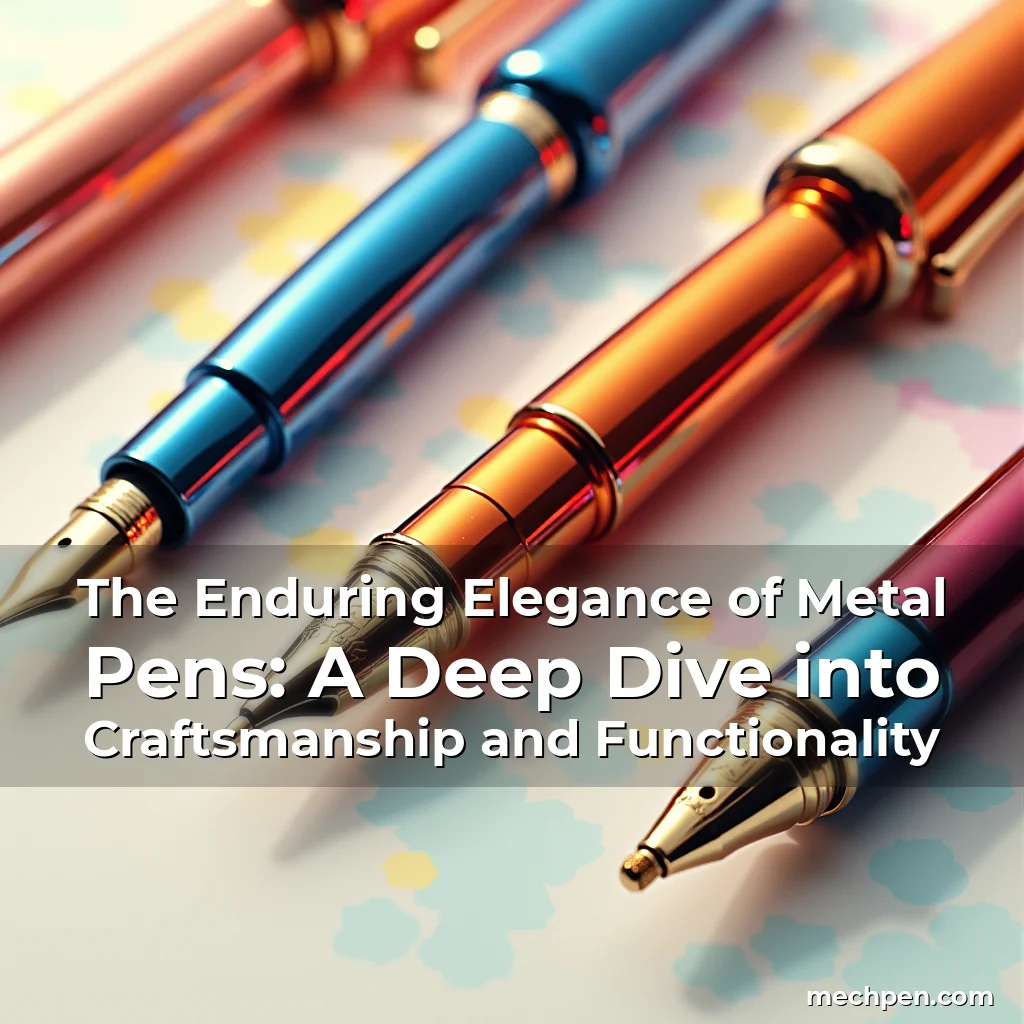
The Enduring Elegance of Metal Pens: A Deep Dive into Craftsmanship and Functionality
In an era dominated by digital interfaces and disposable writing instruments, the metal pen stands as a testament to timeless craftsmanship and enduring quality. These pens are not merely tools for writing but symbols of sophistication, durability, and artistry that have captivated writers, collectors, and professionals alike.
Metal pens have evolved from simple utilitarian objects to prized collectibles and status symbols. Their appeal lies in their ability to combine functionality with aesthetic value, making them indispensable across various industries such as law, engineering, and high-end fashion design.
The Origins and Evolution of Metal Pens
The history of metal pens dates back centuries, with early examples found in ancient civilizations where they were crafted from materials like bronze and iron. Over time, advancements in metallurgy and manufacturing techniques transformed these rudimentary tools into refined writing instruments.
During the Renaissance period, metal pens became more sophisticated, featuring intricate engravings and designs that reflected the artistic movements of the time. This evolution was driven by both technological progress and the growing appreciation for fine craftsmanship among scholars and artisans.
- Early Metallurgical Innovations: The development of alloys allowed for stronger and lighter pen bodies, enhancing user comfort without compromising structural integrity.
- Renaissance Artistry: Engraved patterns and gemstone accents began appearing on elite pens, signifying wealth and social standing during the 16th century.
By the Industrial Revolution, mass production techniques enabled broader access to metal pens while maintaining high standards of quality. However, even amidst mechanization, skilled craftsmen continued to produce bespoke pieces tailored to individual preferences.
The 20th century saw significant innovation in metal pen design, including the introduction of ballpoint mechanisms and ergonomic grips. These changes addressed practical concerns related to ink flow and hand fatigue, further cementing the pen’s place in modern society.
Craftsmanship Behind Premium Metal Pens
Crafting a premium metal pen involves meticulous attention to detail at every stage of the process. From selecting raw materials to final finishing touches, each step contributes significantly to the overall performance and visual appeal of the finished product.
High-quality manufacturers often use precious metals such as gold, silver, or stainless steel due to their inherent strength and resistance to corrosion. These materials also offer greater malleability during shaping processes, allowing for complex designs and customizations.
Selecting the Right Metal Alloy
The choice of alloy plays a crucial role in determining both aesthetics and functional characteristics. For instance, 18-karat gold offers excellent conductivity properties beneficial for fountain pens, whereas titanium provides superior lightness combined with remarkable durability.
Recent studies indicate that users who frequently write extensive notes prefer pens made from heavier alloys since they provide better balance when used for long periods. Conversely, those seeking portability might opt for lighter options without sacrificing build quality.
Manufacturers also consider environmental factors when choosing materials; recycled aluminum has gained popularity due to its sustainability credentials alongside impressive mechanical properties comparable to traditional metals.
Design Elements That Define Luxury Metal Pens
Luxury metal pens distinguish themselves through distinctive design features that elevate their status beyond mere utility. Every element—from grip texture to cap detailing—is carefully considered to enhance both ergonomics and visual impact.
One notable feature is the incorporation of contrasting elements within a single pen body. For example, chrome-plated caps paired with matte-finished barrels create striking visual effects that catch light uniquely depending on viewing angles.
The integration of personalized engraving services allows owners to embed meaningful inscriptions onto their pens, transforming standard items into cherished keepsakes filled with sentimental significance.
Modern luxury brands frequently collaborate with renowned artists or designers to release limited edition collections. These collaborations result in exclusive models that showcase avant-garde styles rarely seen elsewhere in the market.
Functional Advantages of Using Metal Pens
Beyond their elegant appearance, metal pens boast numerous functional advantages that make them preferred choices over plastic alternatives. One key benefit is enhanced heat dissipation which prevents discomfort caused by prolonged usage under direct sunlight.
Moreover, unlike conventional plastics prone to warping over time, metals retain their shape consistently regardless of exposure conditions. This characteristic ensures longevity and maintains consistent writing experience throughout years of regular use.
The superior weight distribution provided by dense metallic structures reduces hand strain compared to lighter counterparts made from composite materials. Users report increased control precision especially noticeable during signature signing sessions requiring delicate strokes.
Additionally, many contemporary models incorporate advanced ink delivery systems designed specifically for metal casings—ensuring smooth operation without any compromise on reliability or consistency.
Collectibility and Investment Value
For enthusiasts within the mechpen community, collecting rare or vintage metal pens can be highly rewarding both intellectually and financially. Certain historical specimens command substantial prices at auction events worldwide, reflecting their cultural importance and scarcity.
Premium brands regularly introduce new series featuring innovative technologies or collaborative projects aimed exclusively at connoisseurs willing to invest considerable sums for exclusivity purposes. These releases generate immense interest among collectors eager to acquire unique additions to their personal libraries.
Authentication becomes paramount when dealing with antique pieces; professional appraisals help determine true worth based on originality, condition, and provenance records. Proper storage methods using anti-static containers protect against damage ensuring preservation of investment value over decades.
Some rare models come with accompanying documentation verifying ownership rights granting legal recognition similar to other forms of tangible assets held within private collections.
Sustainability Considerations in Modern Manufacturing
Eco-conscious consumers increasingly prioritize sustainable practices when purchasing goods including writing implements like metal pens. Manufacturers now emphasize responsible sourcing strategies involving ethically mined ores along with reduced carbon footprints achieved via energy-efficient fabrication procedures.
Recycling initiatives play vital roles too wherein old or damaged pens get repurposed into new products thus minimizing waste generation while promoting circular economy principles applicable across different sectors simultaneously.
Several companies have adopted biodegradable coatings applied selectively rather than full surface treatments thereby reducing chemical usage significantly yet preserving desired finish qualities effectively meeting consumer demands sustainably.
This shift towards greener methodologies does not detract from quality expectations; instead, it reinforces brand reputation positioning firms favorably amongst environmentally aware clientele segments expanding market reach organically.
Choosing Your Ideal Metal Pen: Factors to Consider
Selecting the perfect metal pen requires careful consideration of several critical aspects ranging from intended purpose to aesthetic preferences. Understanding your needs helps narrow down available options increasing chances of finding ideal match suitable personally.
Primary function determines appropriateness—those needing daily office tasks may require simpler models whereas collectors appreciate ornate designs showcasing exceptional workmanship irrespective of everyday usability limitations imposed by complexity levels involved.
Material selection remains fundamental aspect influencing feel, weight distribution, and eventual maintenance requirements. Conductive metals excel in specialized applications while non-corrosive variants suit general use scenarios efficiently avoiding unnecessary complications arising from improper care neglects.
Ergonomic considerations cannot be overlooked either particularly relevant for individuals experiencing chronic pain issues associated with repetitive motion injuries commonly encountered among frequent writers engaged intensively within academic settings or corporate environments respectively.
Trends Shaping the Future of Metal Pen Design
Current trends suggest ongoing innovations poised to redefine how we perceive and interact with metal pens going forward. Emerging technologies coupled with evolving consumer behaviors present exciting possibilities reimagining classic formats previously thought static unchanging entities confined strictly within established paradigms.
Smart technology integration represents one promising direction enabling connectivity features allowing synchronization capabilities between physical devices and virtual platforms facilitating seamless transition experiences bridging analog tradition seamlessly with digital modernity.
Customizable modular components cater another emerging trend permitting users assemble personalized configurations according to changing needs dynamically adapting functionalities instantly without necessitating complete replacements rendering existing investments adaptable future-ready solutions effortlessly.
Furthermore, augmented reality applications facilitate interactive learning opportunities demonstrating internal mechanics visually augmenting educational potential accessible globally transcending geographical barriers typically restricting knowledge dissemination traditionally dependent solely upon textual descriptions alone insufficiently conveying three-dimensional spatial relationships accurately.
Conclusion
The journey through the world of metal pens reveals much more than just writing instruments—they embody centuries-old traditions merged harmoniously with cutting-edge advancements creating multifaceted artifacts worthy of admiration respect.
Whether you’re drawn to their historical significance, superior construction qualities, or simply appreciate beautiful design elements integrated meticulously into every component comprising these exquisite creations, there exists something inherently special connecting generations past present together uniting common ground rooted firmly within shared human experiences expressed eloquently through written word.