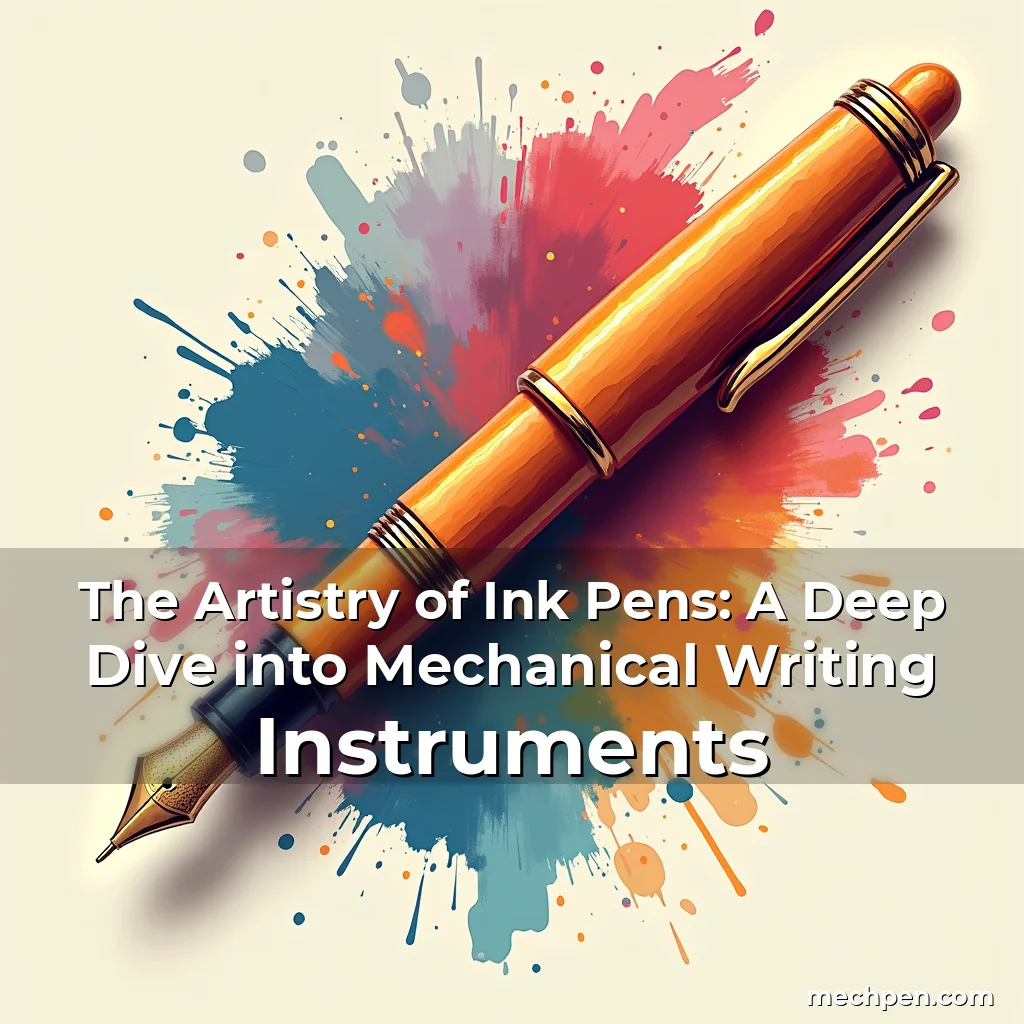
The Artistry of Ink Pens: A Deep Dive into Mechanical Writing Instruments
Ink pens remain timeless symbols of creativity, precision, and elegance, blending artistry with function to produce strokes that capture both thought and emotion. For enthusiasts of mechanical pencils—the “mechpen” community—intriguing parallels exist between the meticulous engineering of these writing instruments and the refined design of high-quality ink pens.
This article explores the world of ink pens from a perspective that resonates deeply with those who appreciate the mechanics behind fine writing tools. We’ll uncover why ink pens continue to captivate writers, artists, and engineers alike, offering insights into their history, construction, and evolving relevance in today’s fast-paced digital age.
The Evolution of Ink Pens: From Quills to Modern Precision
The journey of the ink pen begins centuries ago when quills were the primary tool for writing. These feather-based implements required constant dipping into ink pots, limiting efficiency and requiring frequent reapplication. As technology advanced, early forms of dip pens emerged, allowing for smoother ink flow but still lacking the convenience of modern writing instruments.
The invention of the metal-nibbed pen in the late 18th century marked a significant leap forward. By the mid-19th century, the development of the fountain pen revolutionized writing by incorporating an internal reservoir of ink, eliminating the need for external inkwells. This innovation laid the foundation for what we now recognize as the modern ink pen.
- Quill to Metal Nibs: Early writing tools relied heavily on natural materials, which often degraded quickly under repeated use. The transition to metal nibs offered greater durability and consistency in line quality.
- Fountain Pen Innovation: The integration of capillary action allowed ink to travel smoothly along the nib, reducing smudging and improving legibility. This mechanism remains central to many contemporary ink pens.
Diverse Types of Ink Pens and Their Unique Characteristics
Today’s market offers a wide array of ink pens, each designed for specific purposes ranging from casual note-taking to professional correspondence. Understanding the distinctions between these varieties helps users select the best option for their needs.
Fountain pens stand out due to their elegant appearance and fluid ink delivery system. Gel pens provide vibrant color and resistance to water, making them ideal for artistic applications. Rollerball pens combine aspects of ballpoint and fountain pens, delivering smooth lines with minimal pressure sensitivity.
A Closer Look at Fountain Pen Inks vs. Other Options
Fountain pen inks differ significantly from those found in gel or rollerball pens. They typically contain larger pigment particles suspended in liquid, resulting in richer colors and better archival qualities. However, this also means they require careful handling to prevent clogging or fading over time.
Gel pen inks consist of dye encapsulated within microscopic polymer balls, providing excellent visibility against various paper surfaces. While less prone to drying out than fountain pen inks, they may not offer the same level of customization available with traditional fountain pen refills.
Selecting Your Perfect Ink Pen: Key Considerations
Choosing an ink pen involves evaluating several factors including personal preference regarding feel, performance requirements, and budget constraints. Whether you’re seeking a daily-use companion or collecting rare models, understanding these variables ensures satisfaction with your selection.
Consideration must be given to the type of nib employed since this greatly affects writing comfort. Fine-tipped nibs suit precise detailing tasks whereas broader ones excel at producing bold signatures or expressive strokes suitable for sketching.
- Nib Size Selection: Experiment with different tip widths before committing permanently; some brands even allow interchangeable nibs so users can tailor their experience dynamically.
- Refill Compatibility: Many premium ink pens feature refillable cartridges or converters enabling easy replacement without discarding entire units—an environmentally conscious choice appreciated widely amongst eco-aware consumers.
Maintenance & Care Tips for Longevity of Ink Pens
To maximize lifespan and performance from any ink pen, regular upkeep becomes essential. Neglecting basic maintenance practices can lead to blockages, leakage, or diminished writing quality over time.
Cleaning procedures vary slightly depending upon whether you own a fountain pen requiring thorough flushing weekly or simply store yours safely away during periods of nonuse. Always follow manufacturer recommendations closely concerning recommended frequencies for deep cleanses versus routine wipe-down sessions.
Troubleshooting Common Issues With Ink Pens
If experiencing problems such as skipping marks across pages, first check if sufficient air exists inside the barrel area—if none then gently tapping lightly onto hard surface might resolve minor obstructions temporarily until full servicing occurs later.
Leakage incidents usually stem from improper sealing mechanisms either because caps weren’t tightened properly after filling operations occurred recently. To mitigate risk always ensure secure closure whenever transporting devices anywhere especially in pockets close to heat sources.
Cultural Significance And Notable Users Of Ink Pens Throughout History
Beyond mere utility, ink pens carry profound cultural weight having influenced countless individuals throughout human civilization. Prominent figures ranging from literary giants to scientific pioneers have left indelible imprints via handwritten letters penned using such devices.
Notably, authors like Mark Twain famously preferred handwriting his works rather than typing machines largely attributable partly towards emotional attachment formed toward physical touch involved when crafting prose manually.
Technological Innovations Enhancing Modern Ink Pens
Recent decades witnessed remarkable technological strides enhancing functionality without compromising aesthetic appeal inherent within classic designs. Innovators continually strive to merge old-world charm seamlessly alongside cutting-edge features appealing broadly across diverse demographics.
Piston filler systems represent one notable advancement allowing users self-contained refilling processes devoid reliance upon external bottles thereby increasing portability considerably compared previous generations reliant solely on disposable cartridges.
- Eco-Friendly Designs: Increasing awareness surrounding sustainability has prompted manufacturers exploring biodegradable materials capable replacing conventional plastics commonly utilized housing structures currently prevalent industry standards today.
- Smart Features Integration: Some newer models incorporate Bluetooth connectivity enabling syncing written notes automatically onto smartphones thus bridging gap existing between analog tradition digital convenience increasingly demanded nowadays.
Conclusion
From humble beginnings rooted ancient civilizations till present day marvels showcasing ingenuity coupled beauty, ink pens endure testament humanity’s enduring fascination capturing ideas tangibly expressively through strokes applied deliberately carefully crafted moment-to-moment interaction.
Whether drawn towards intricate mechanical complexities underlying finest specimens produced globally today or simply desiring reliable instrument aiding everyday communication needs, there never been greater opportunity explore multitude choices available contemporary marketplace catering varied tastes preferences worldwide audience spanning cultures continents alike.